


Four Essential Scuba Skills Beginners Learn Before Their First Dive
Before exploring Maui’s coral reefs, every Discover Scuba Diving participant must learn and successfully demonstrate four essential scuba skills. These exercises take place in approximately three to four feet of water, where participants have immediate access to the surface. Your instructor remains directly beside you and guides you through each step.
Before beginning the four skills, you will practice breathing slowly, deeply and continuously through your regulator. Scuba divers should never hold their breath underwater. Exhaling fully before taking a slow breath can help you establish a calm breathing rhythm, conserve air and become more comfortable with the equipment.
The first skill is clearing your regulator by exhaling through it. The regulator is the part of your scuba equipment that supplies the air you breathe underwater. If a small amount of water enters it, you can remove the water by exhaling forcefully through the mouthpiece.
A helpful technique is to say “TWO” into the regulator. The strong “T” sound produces a forceful burst of air that helps clear the remaining water. Your instructor will demonstrate the technique before asking you to practice it.
The second skill is clearing the regulator with its purge button. Pressing this button releases air through the regulator and pushes the water out. Your instructor will show you how to position your mouth and tongue comfortably while using the purge function.
The third skill is regulator recovery. If the regulator comes out of your mouth, you need to know how to locate it and return it to the proper position. Divers learn to lean toward the right and sweep the right arm in a wide motion from the knee toward the back, allowing the regulator hose to fall across the arm where it can easily be recovered.
The fourth skill is clearing water from your mask. A small amount of water may enter if the mask’s seal is disturbed, sometimes simply because a diver smiles. Learning to remove that water helps you remain calm and comfortable without returning to the surface.
During the exercise, you allow a small and controlled amount of water to enter the mask. You hold the top of the mask, tilt your head back, inhale through your mouth and exhale steadily through your nose. The air from your nose pushes the water out through the bottom of the mask.
Your instructor will also teach you how to equalize your ears and sinus spaces while descending. One common method is the Valsalva maneuver, which involves pinching your nose and blowing gently against the closed nostrils. Swallowing, moving your jaw and moving your head from side to side may also help.
Never continue descending if you experience discomfort in your ears or sinuses. Signal your instructor, move slightly upward, relax and try equalizing again. Equalizing early and frequently can help make your descent more comfortable.
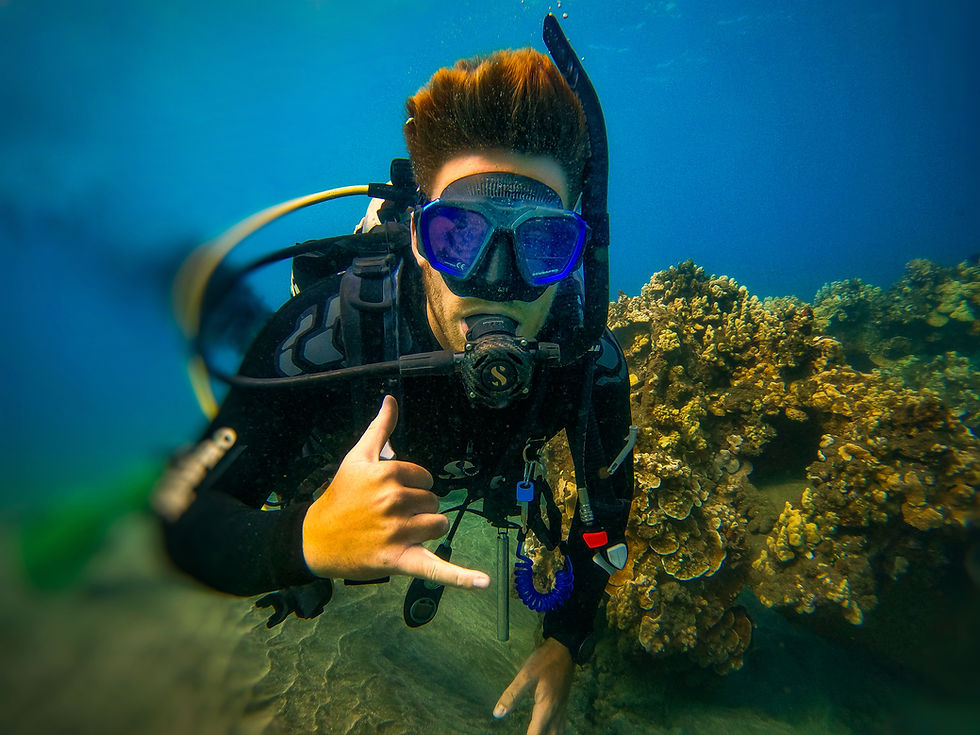
Divers also learn underwater hand signals such as “Okay,” “Problem,” “Up,” “Down,” “Stop” and “Check Your Air.” These signals allow you and your instructor to communicate throughout the dive. Paying attention to your instructor and responding clearly are essential parts of the experience.
Once the reef tour begins, you will primarily use your fins instead of your arms to move through the water. Keeping your arms relaxed helps conserve energy, reduces air consumption and lowers the risk of bumping into another diver or the reef. Previous snorkeling experience can make finning and maintaining a horizontal position feel more familiar.
Breathing also affects your buoyancy underwater. A deeper inhalation may cause you to rise slightly, while a deeper exhalation may help you descend. Developing a slow and steady breathing rhythm makes it easier to move comfortably through the water.
Most divers will not need to use every skill during the guided reef tour. However, practicing them beforehand helps participants feel prepared and respond calmly if a common situation occurs. Aloha Maui Diving instructors teach these skills to support a safe, comfortable and enjoyable first scuba diving experience.



Comments